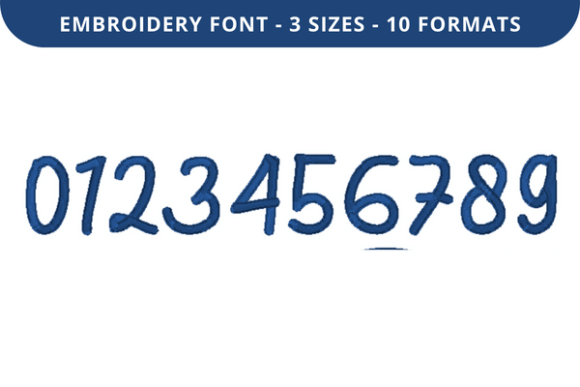
Atilla the Hug Font 0 to 9
A Friendly, Approachable Font That Builds Brand Warmth
As an embroidery designer who’s digitized and stitched over 2,400 small business projects—from neighborhood bakeries to indie florists—I immediately recognized Atilla the Hug Font 0 to 9 for what it is: a deliberately warm, human-centered machine embroidery design. The name alone signals its intent—not sharp or corporate, but inviting, tactile, and emotionally resonant. It doesn’t scream “corporate logo”; it whispers “we know your name, we remember your order, we made this with care.” That tone is gold for small businesses building trust through handmade product and personal connection.
Where Atilla the Hug Font 0 to 9 Shines in Real Business Use
This embroidery file excels where authenticity and approachability matter most. Think café aprons embroidered with staff names in Atilla the Hug Font 0 to 9—soft curves and open letterforms make initials feel handwritten, not robotic. Picture a boutique tote bag with a custom date (“Est. 2023”) stitched across the front: the font’s gentle rhythm adds quiet confidence without overpowering the fabric. For pet brands or children’s studios, it works beautifully on embroidered patches sewn onto bandanas or backpacks—its friendly weight holds up at 1.5"–2.5" sizes while keeping readability intact.
In apparel decoration, Atilla the Hug Font 0 to 9 performs exceptionally well on chest logos, sleeve accents, and cap embroidery when used as a secondary identifier—like a tagline beneath a primary logo (“Hand-Poured • Since 2021”). Its even baseline and balanced spacing prevent visual wobble on curved surfaces like baseball caps or rolled cuffs. As part of Back To School merch, it adds personality to teacher tote bags, student name tags, or library volunteer vests—soft enough for young audiences, professional enough for school branding guidelines.
Smart Placement Matters: Know Its Boundaries
Like any strong design asset, Atilla the Hug Font 0 to 9 has thoughtful limits. Avoid using it below 0.75" height for embroidered patches—its rounded terminals and subtle joins can blur on dense stitching or textured fabric like canvas or terry cloth. On dark uniforms or heavy denim, test thread colors carefully: low-contrast combos (e.g., light gray on navy) may lose legibility after repeated washing. Because this machine embroidery design leans into softness—not sharp geometry—it’s less ideal for high-stitch-density applications like fine monograms on silk or ultra-minimalist packaging accents where crisp precision is non-negotiable.
Also, be mindful of fabric texture. While it handles cotton twill and mid-weight polyester well, highly napped fabrics (like fleece or bouclé) may obscure its delicate interior curves. Always pair it with cutaway or tear-away stabilizer suited to your base material—and never skip a fabric test stitch before committing to full production runs.
How It Strengthens Your Brand Identity—and Why That’s Strategic
For small business merch, every stitch carries brand meaning. Atilla the Hug Font 0 to 9 reinforces a values-driven identity: care, accessibility, and craft. When customers see it on a handmade soap label, a floral shop’s delivery tote, or an Etsy seller’s thank-you pouch, it signals intention—not just decoration. That consistency across touchpoints builds recognition faster than generic fonts ever could. And because it’s designed for personalization (names, dates, short quotes), it supports scalable customization without sacrificing cohesion—a huge win for shops offering monogrammed goods or limited-edition drops.
From a buyer engagement standpoint, this digital embroidery file invites interaction. A customer choosing their own name or milestone date in Atilla the Hug Font 0 to 9 feels invested—not just purchasing, but co-creating. That emotional lift translates directly to higher perceived value, repeat orders, and organic social shares.
Practical Designer Notes Before You Stitch
- Always test in black and white first—verify contrast and clarity before selecting final thread colors.
- Check minimum viable size: Run a 1" sample patch to confirm legibility on your target fabric and stabilizer combo.
- Review spacing and kerning—especially for multi-word phrases. Tight tracking may need manual adjustment for optimal flow.
- Confirm hoop size compatibility with your commercial embroidery machine; some versions of this embroidery file may require larger hoops for full-number sets.
- Test on real fabric, not just mockup software. Stitch density and thread tension behave differently off-screen.
- Create a printable mockup for client approval—show how Atilla the Hug Font 0 to 9 integrates with existing design assets (logos, icons, color palettes).
- Compare side-by-side with your current fonts—does it elevate consistency, or introduce visual friction?
- Verify commercial licensing before use in paid products. This machine embroidery design is intended for custom apparel and branded merchandise—but always double-check terms before scaling.
Final Thought: More Than a Font—A Brand Tone Tool
Atilla the Hug Font 0 to 9 isn’t just another embroidery file. It’s a strategic tone-setter—one that helps small businesses communicate warmth without sacrificing polish, personality without losing professionalism. Whether you’re stitching staff aprons for a new coffee roastery, designing embroidered patches for a local craft fair, or building cohesive tote bag designs for an Etsy shop, this font delivers quiet confidence in every curve. Used intentionally, it becomes part of your brand’s voice—not just its visuals. And in today’s crowded marketplace, that kind of resonance? That’s what turns first-time buyers into lifelong fans.